
When the Scroll Stops: What a Social Media Pause Taught Me
Late last year, in the lead-up to Christmas, I made a quiet decision to step away from social media.
At the time, deadlines were tight, my mind was full, and the noise felt relentless — not just on social media, but in life more broadly. Work was busy, the outside world felt loud, and I could feel my attention becoming increasingly fragmented.
What I planned as a six-week break quietly turned into ten.
At first, I thought the biggest shift would simply be having less noise in my day. Less advertising. Less commentary. Less pressure to keep up, post, respond or pay attention.
And that was certainly part of it.
What surprised me most, however, was what happened in the quiet moments.
The habit beneath the scroll
Without even thinking, I would find my hands reaching for my phone.
Sitting in the car. Waiting for an appointment. Standing in the kitchen. Pausing between tasks. My hands seemed to move before my mind had fully caught up.
It made me think of a smoker trying to give up smoking. Not because social media is the same thing, but because the habit seemed to live not only in my mind, but in my body. My hands wanted something to do. My mind seemed to crave that little buzz — that quick hit of stimulation, distraction or relief.
And when I noticed it, I found myself asking a deeper question:
Why was it so hard to simply sit with the silence?
Why could I not just be at ease with a quiet moment and my own thoughts?
The truth is, my mind is rarely still. It is often busy thinking, planning, wondering, processing and solving. In many ways, that is a strength. It is part of what allows me to do the work I do.
But in those moments, I started to wonder whether reaching for my phone was really giving me a break at all.
Was I craving rest?
Or was I simply filling up my disk space even more?
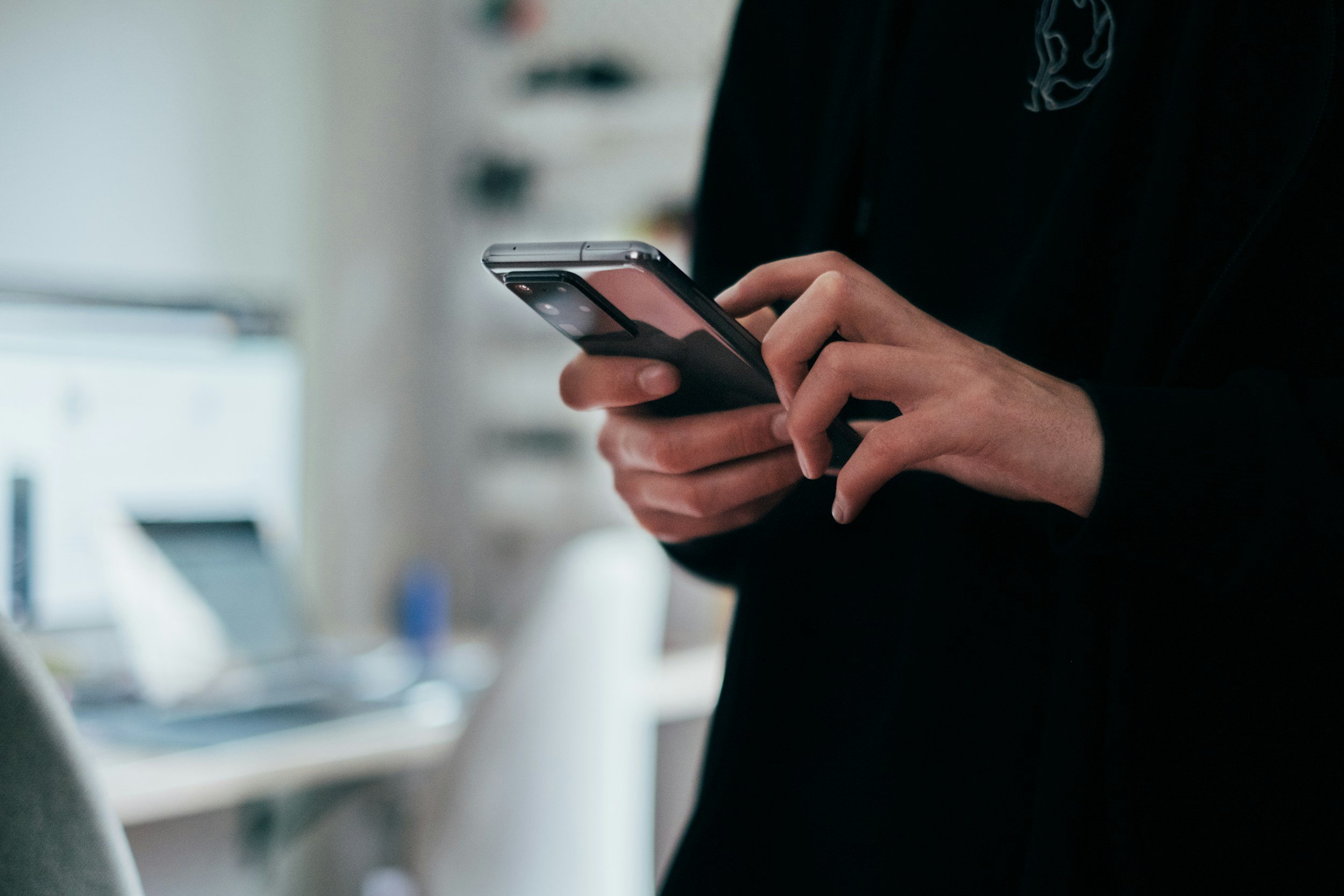
A full mind does not need more noise
That question stayed with me.
Because what I came to realise is that not every pause is restful. Some pauses are simply another form of input. Another layer of noise. Another small act of avoiding stillness.
When I stopped scrolling, I did not suddenly become someone who sat peacefully in silence, sipping tea and gazing out the window like a woman in an art gallery brochure. Not even close.
I filled some of that space with other things — reading emails, playing solitaire, doing Wordle. Easier, lower-effort distractions. Things that still gave my brain something to touch without demanding too much from me.
Reading a book, for example, sounded like a lovely idea. But reading asks for concentration. Presence. Energy. Scrolling asks for almost none of those things.
That was part of the pull.
What I noticed about advertising
Another thing became very clear during the break: just how much advertising shapes our thinking, often without us fully realising it.
My feeds had become full of sales, offers and subtle invitations to want more, buy more, compare more. Stepping away from that had its own benefits.
When you already have a wardrobe full of clothes, do not need more things, and genuinely care about waste and the environment, the constant lure of advertising creates a quiet internal tension.
Less scrolling meant less temptation.
Less temptation meant less noise.
Less noise meant a little more space.
The clarity that came from stepping back
And in that space, something important happened.
I gained clarity.
Not overnight, and not in some dramatic, life-altering flash. But slowly, steadily, I began to feel clearer about the direction of Cranham & Co and the kind of work I want to focus on in 2026.
The pause helped me reconnect with what matters most to me — thoughtful work, meaningful conversations, genuine connection, and a pace that allows for depth rather than constant reaction.
I am already loving where this year is taking me, and I do not think that clarity happened by accident. I think it came because I was willing to step back from the noise long enough to hear my own thinking again.
Connection still matters
The break also reminded me that social media is not all bad.
For many friends and family members, it is one of the ways we stay connected across busy lives. There is value in that. I felt that too. I still wanted to see the moments that mattered to people I care about — the celebrations, the holidays, the snippets of ordinary life.
But I have returned with a different mindset.
Less obligation.
Less performance.
More intention.
For me, that means using social media more mindfully and not mistaking constant presence for meaningful contribution.

Take care of yourself
There is something I often come back to in my work:
Take care of yourself.
It sounds simple, but it asks more of us than we think.
It asks us to notice what is draining us.
It asks us to pay attention to where our energy is going.
It asks us to question habits that look normal but leave us feeling full, scattered or depleted.
And sometimes, it asks us to step back before we can see clearly again.
This small experiment reminded me that full minds need space.
Busy hands need stillness.
And clarity rarely arrives in the noise.
Sometimes it appears when the scroll stops.